
GetVocal AI
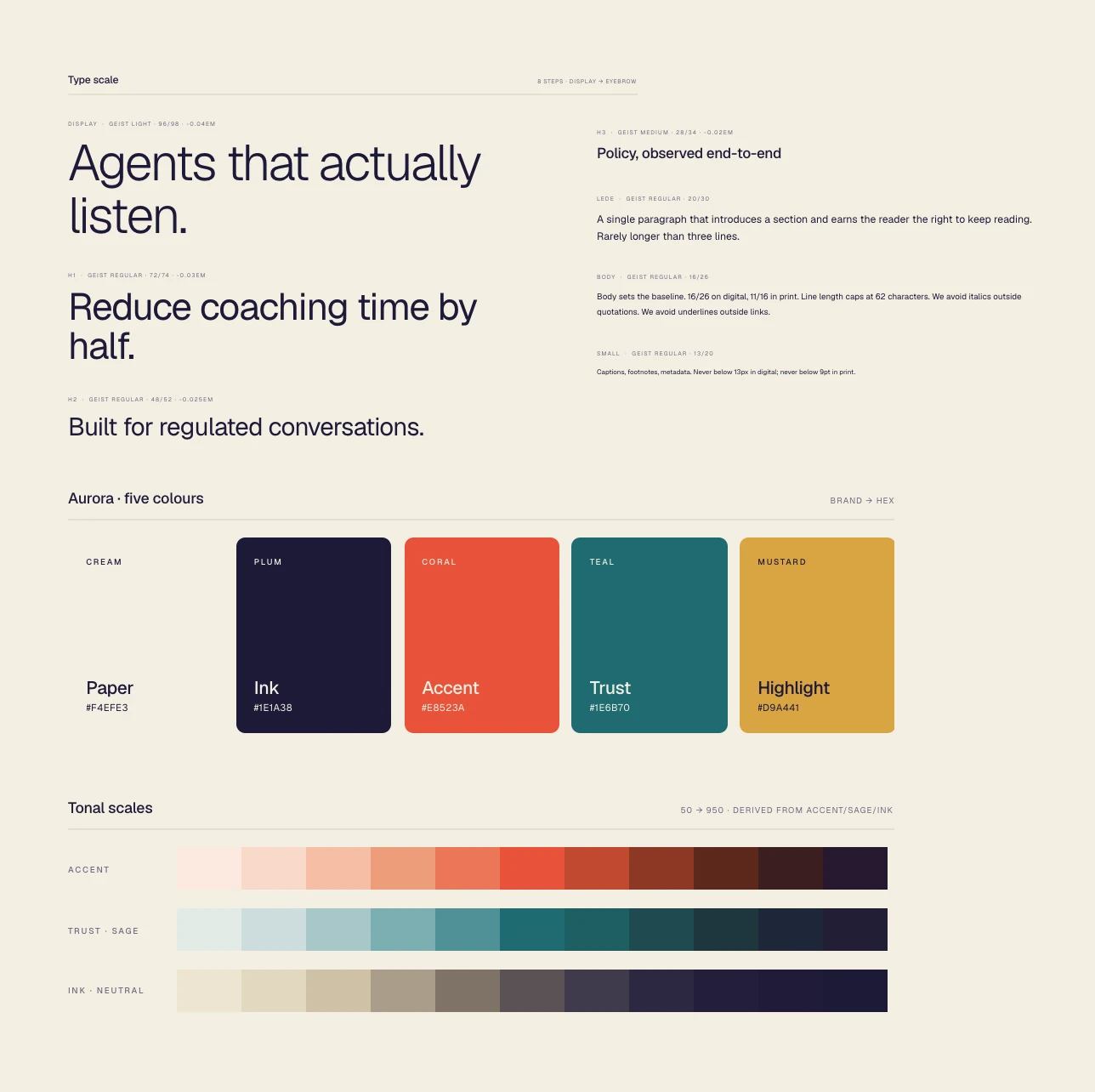
Brand, product, and design system for a company moving at the pace of conversational AI — as lead designer, with a small team carrying the company's entire design output.
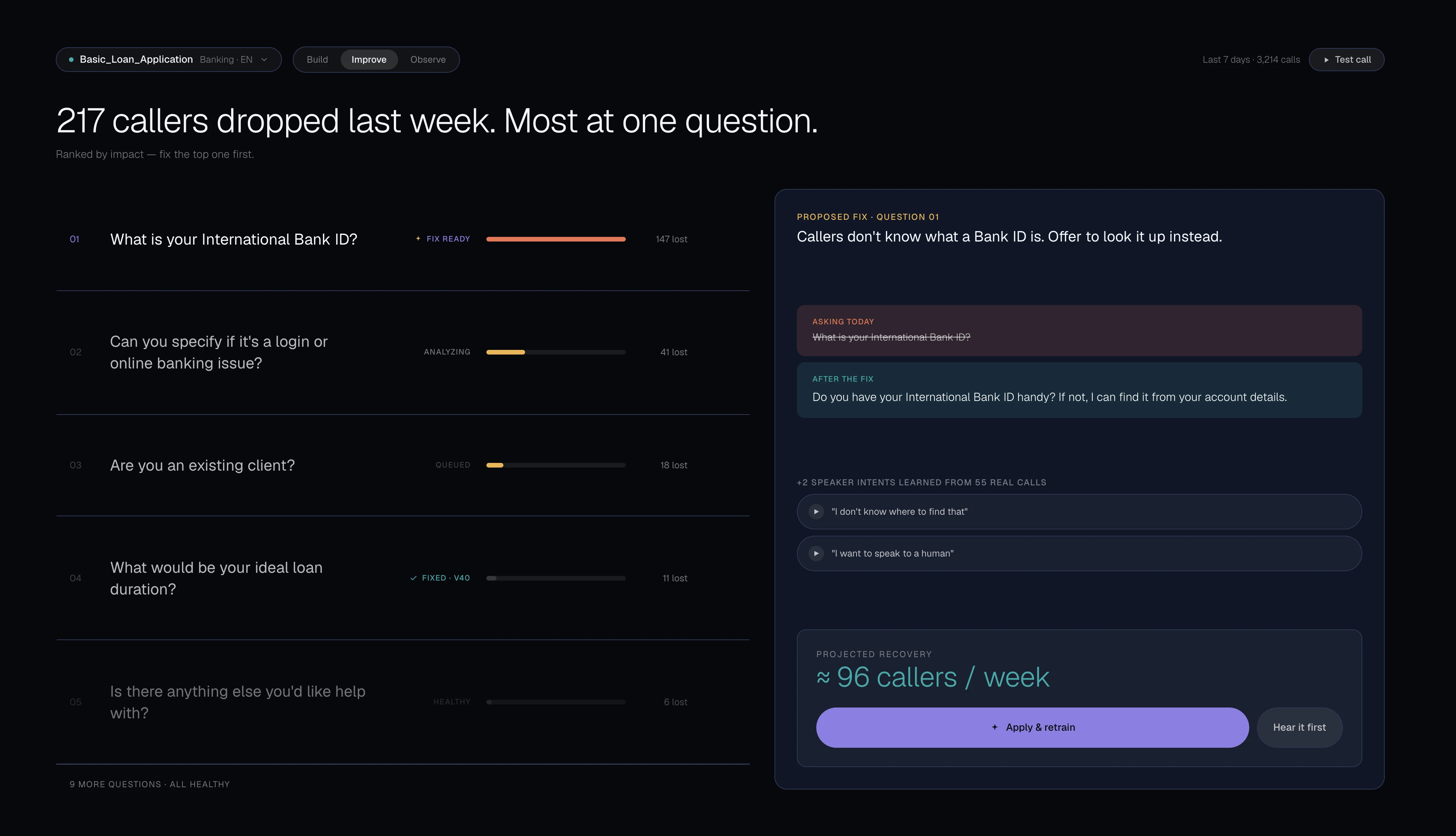
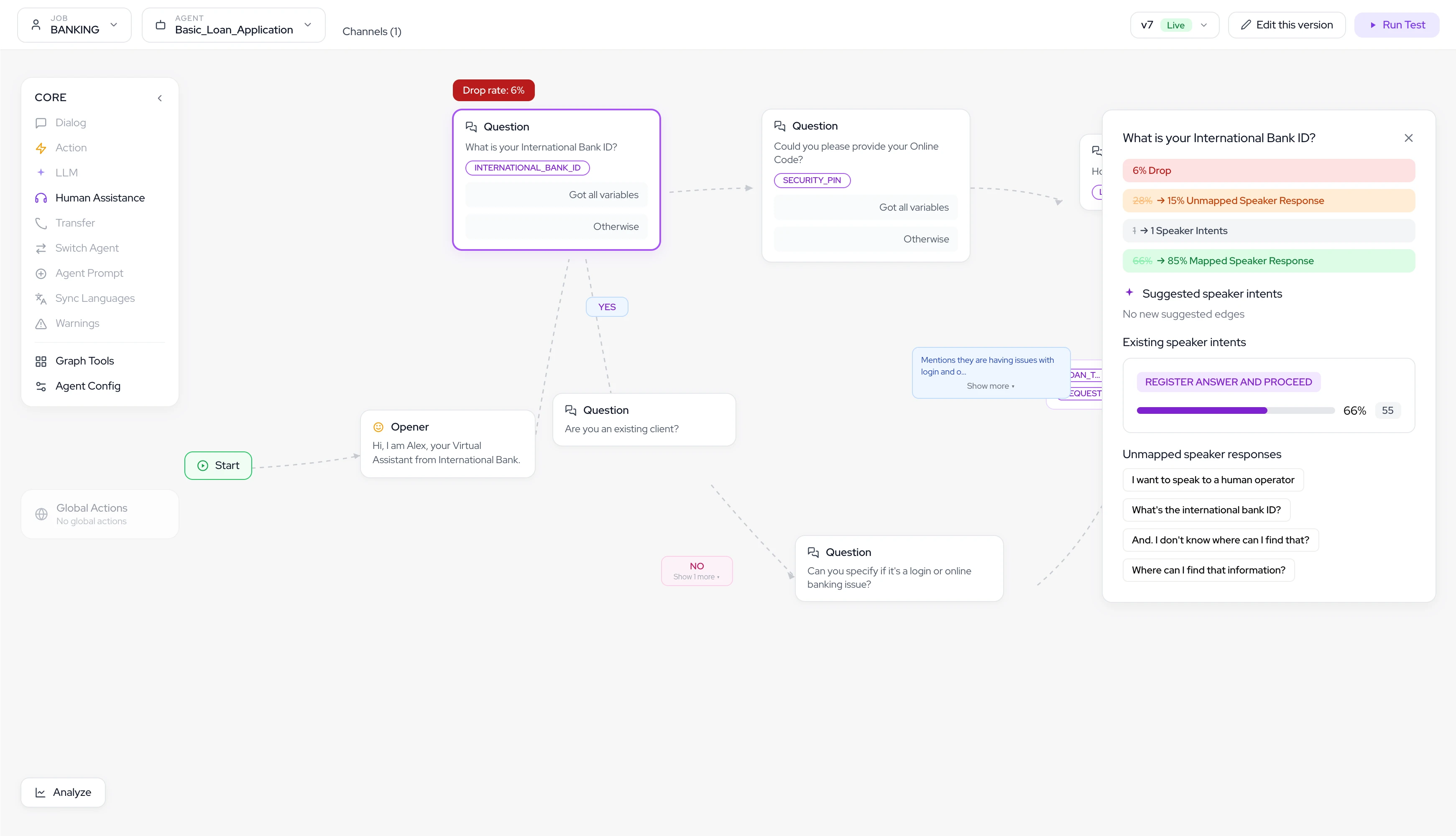
GetVocal is an enterprise AI agent platform running high-stakes live conversations for companies like Vodafone, Deutsche Telekom, and Glovo — deterministic business logic and generative language held in balance, where neither can override the other. I was drafted in to help construct the next iteration of the product: the surface that would define how agents are managed and improved through human-AI interaction.
THE BRIEF
Lead the company's design output as one continuous piece — brand, product, design system, and marketing and communications — and keep it harmonious across the website, the product, and everything the company put into the world. Keeping pace meant working the way the industry now does — agentic design workflows, AI-assisted prototyping, shipping working software rather than static mockups.
THE WORK
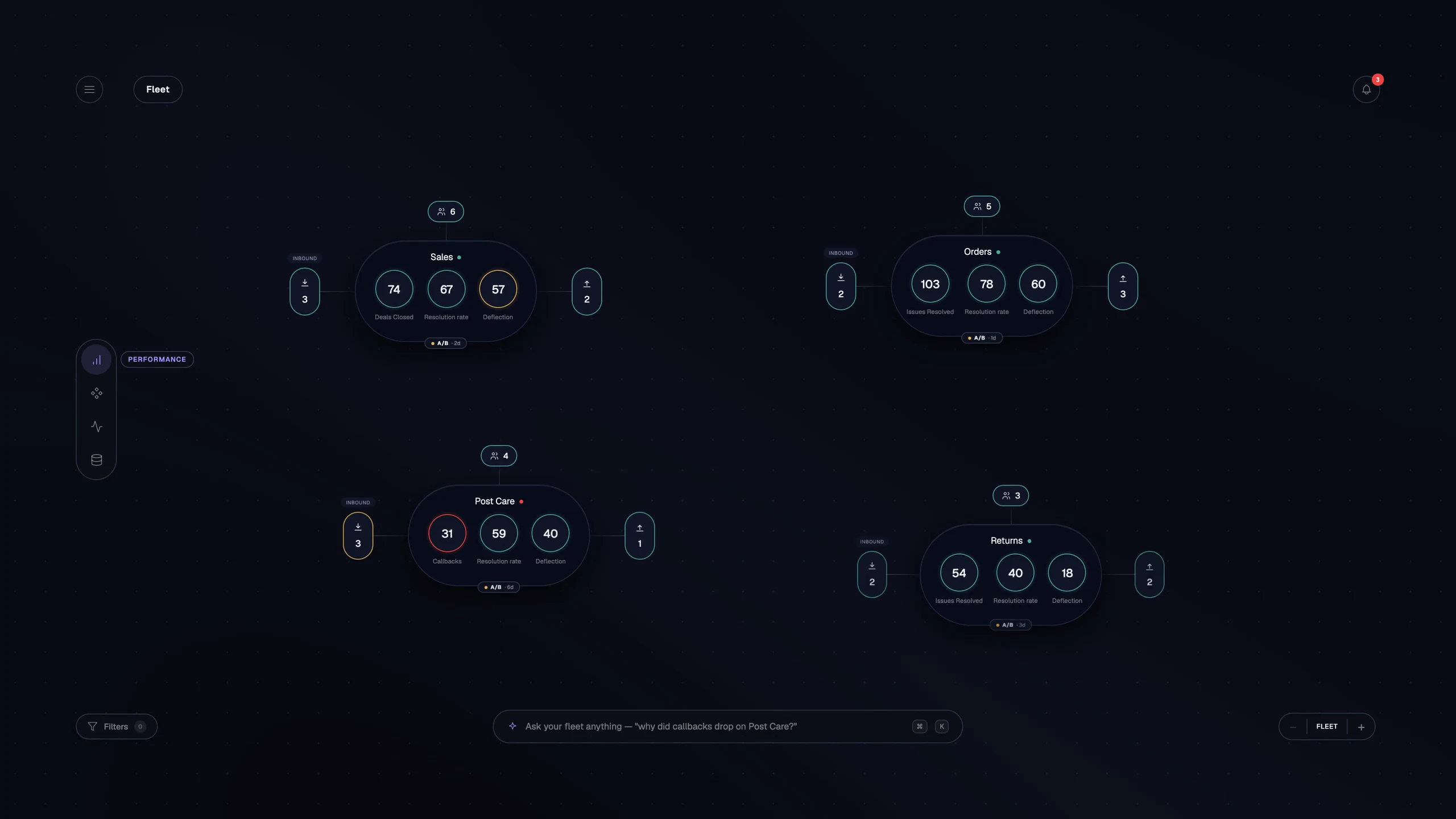
The centerpiece is the Agent Control Tower — a new agentic fleet management platform where operators monitor, audit, and improve live agent fleets at scale. At fleet zoom, thirty agents arrange themselves through pixel-space physics — teams cluster, handoffs travel as comet arcs, health rolls up into each cluster's ring. Click through and the canvas re-centers on one agent with its constellation of operators, triggers, and data connections fanned around it.
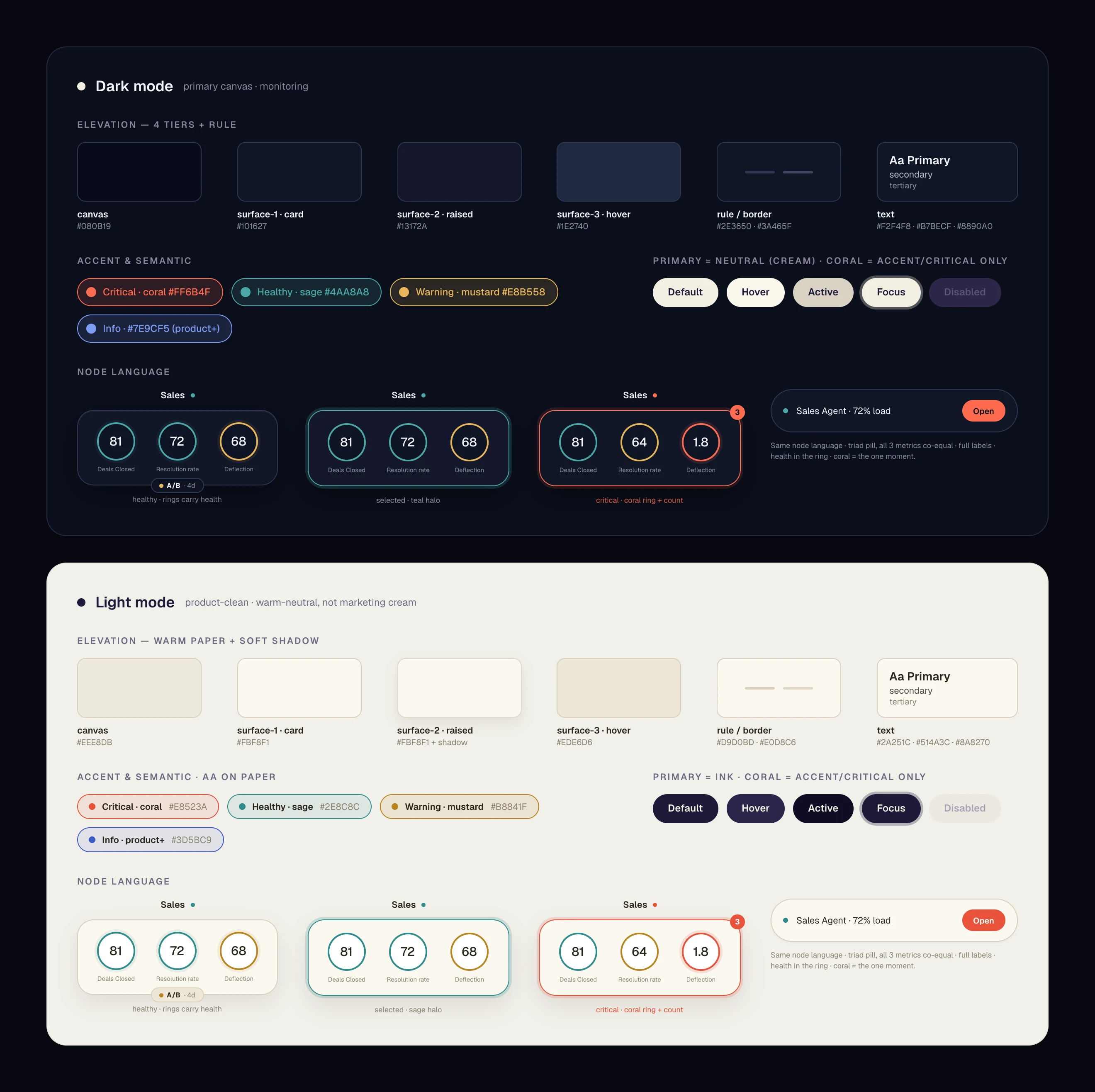
The agent node itself went through a deliberate de-game-ification: from a glowing orb to a quiet capsule holding three co-equal metrics, health carried in a thin ring instead of a bloom. Around it sits a progressive-disclosure language borrowed from OS design — inputs and outputs collapse to single pills, flow is felt through position and hairlines, and panels bloom outward from the node while the rest of the canvas quiets.
Two grounds carry the whole system: a blue-charcoal dark mode where only the rings hold color, and a warm-paper light mode drawn from the Aurora brand book. Sage means healthy, mustard means warning, and coral is reserved for the one moment per frame that genuinely needs you. All of it lands as a brand evolution tokenized into a design system holding product, website, and comms in a single voice — the same system that directs the marketing and communications surfaces, keeping campaign, web, and in-product language consistent as the company scales. And it ships as working interactive React prototypes rather than static mockups, so the product team tests direction in real conditions.
THE SHIFT
Underneath it all, I led the transition to agentic design workflows. As interfaces become generatable on demand, the craft moves upstream — into curation and governance of the design system itself, so the system carries the taste, tokens, and rules the next generation of the product is drawn from.